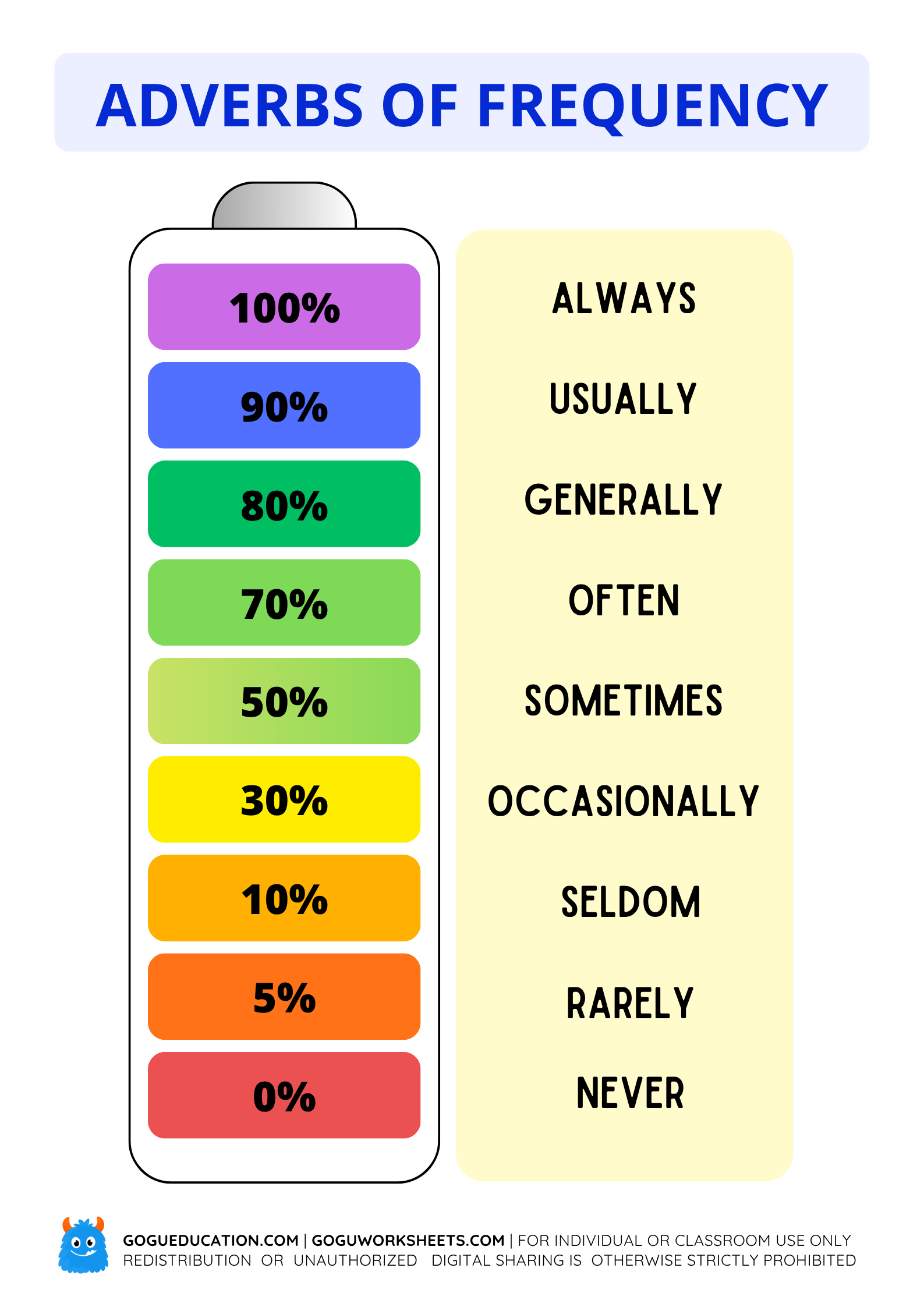
Mastering Adverbs of Frequency is a vital step for English learners who want to describe their daily routines and habits with precision. These essential grammar tools—ranging from always (100%) to never (0%)—provide the necessary context to explain how often an action occurs. Whether you are a student preparing for an exam or a teacher looking for clear classroom resources, understanding the specific placement rules for these adverbs is key to building natural-sounding sentences.
Adverbs of Frequency
Master how often things happen in English. Use the chart to learn, check the rules, and test your knowledge!
Additional Context
1. Main Verbs
Adverbs usually come BEFORE the main verb.
Example: I often cook dinner.
2. The Verb "To Be"
Adverbs come AFTER the verb "to be".
Example: He is always happy.
3. Question & Negative
In questions, the adverb goes after the subject.
In negative sentences, it goes between the auxiliary and the main verb.
Check Your Knowledge!
What percentage corresponds to this adverb?
English Grammar: Adverbs of Frequency Poster
Enhance vocabulary and sentence structure with our Adverbs of Frequency poster. This visual guide helps learners master how to describe how often actions happen, from "always" to "never."
Action Required
Please accept terms to unlock file