Master the most important verb in English. Learn how to use “To Be” (am, is, are) in the present tense with clear examples, conjugation charts, and simple rules.
The verb to be is the cornerstone of English. Whether you are describing yourself, your state, or your location, mastering its forms in the past, present, and future is essential.
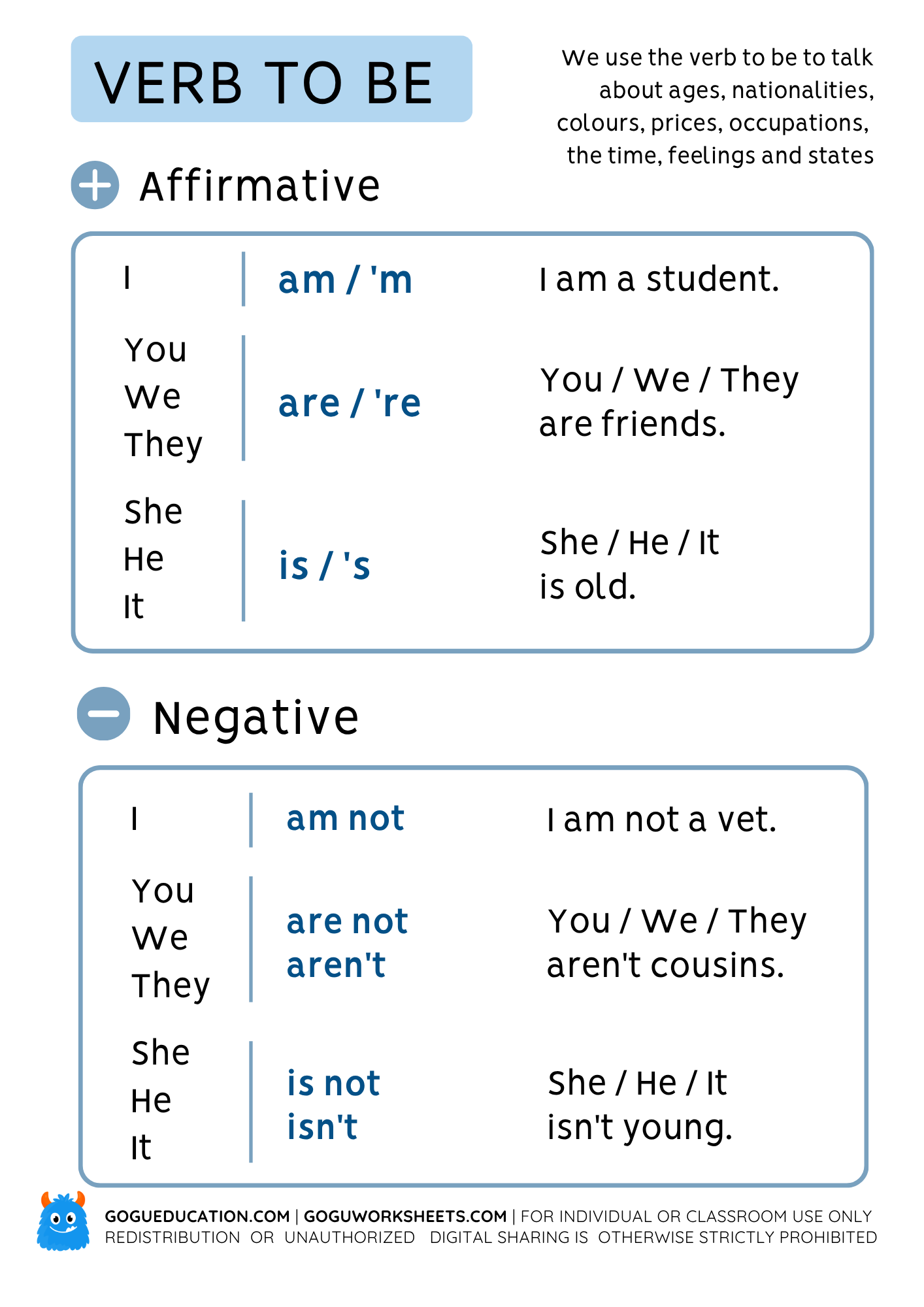
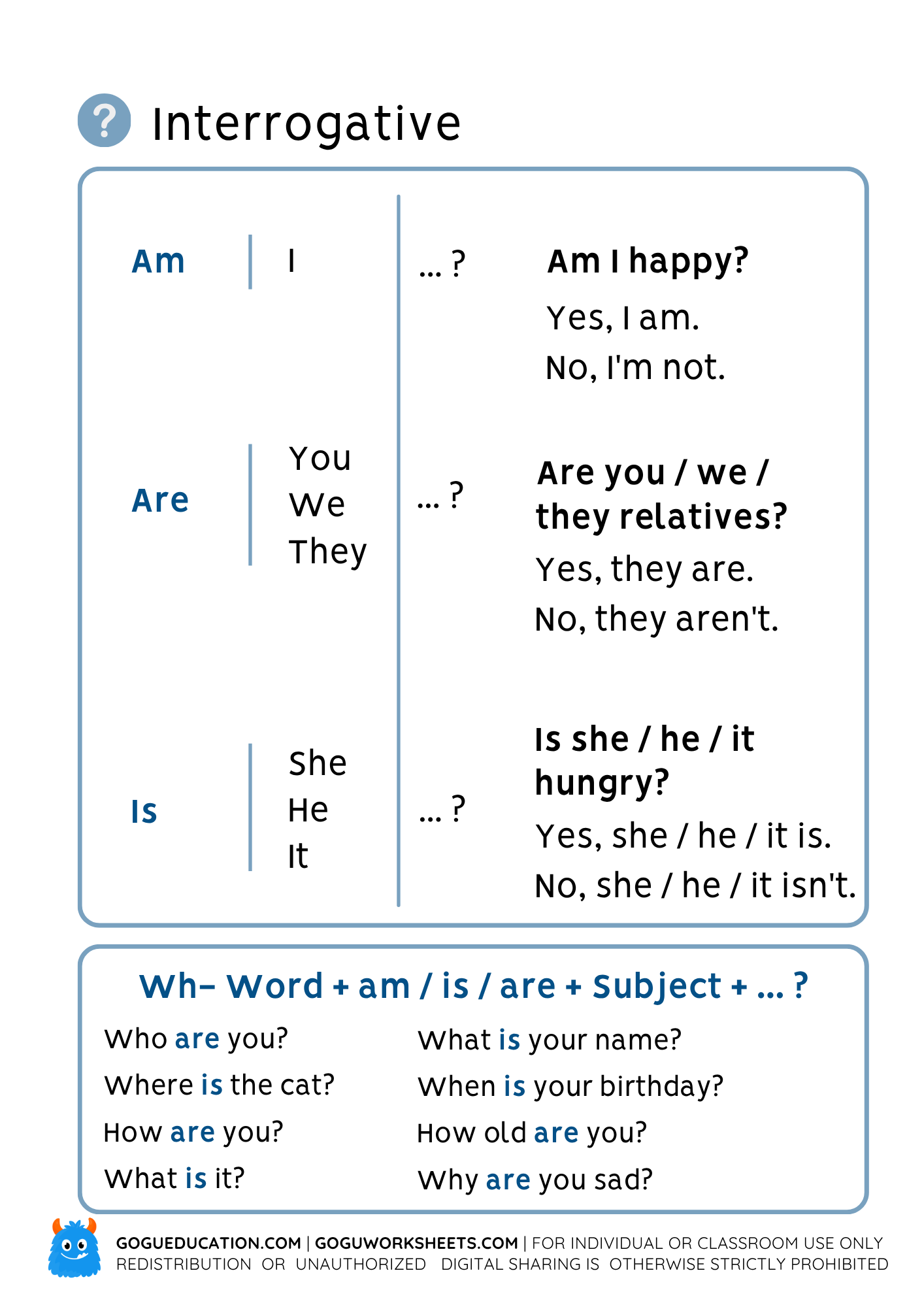
Verb To Be: Affirmative, Negative & Interrogative
Master the three primary forms of the English verb "to be" with our comprehensive poster set. Includes clear examples for positive statements, negative contractions, and question structures.
Action Required
Please accept terms to unlock file
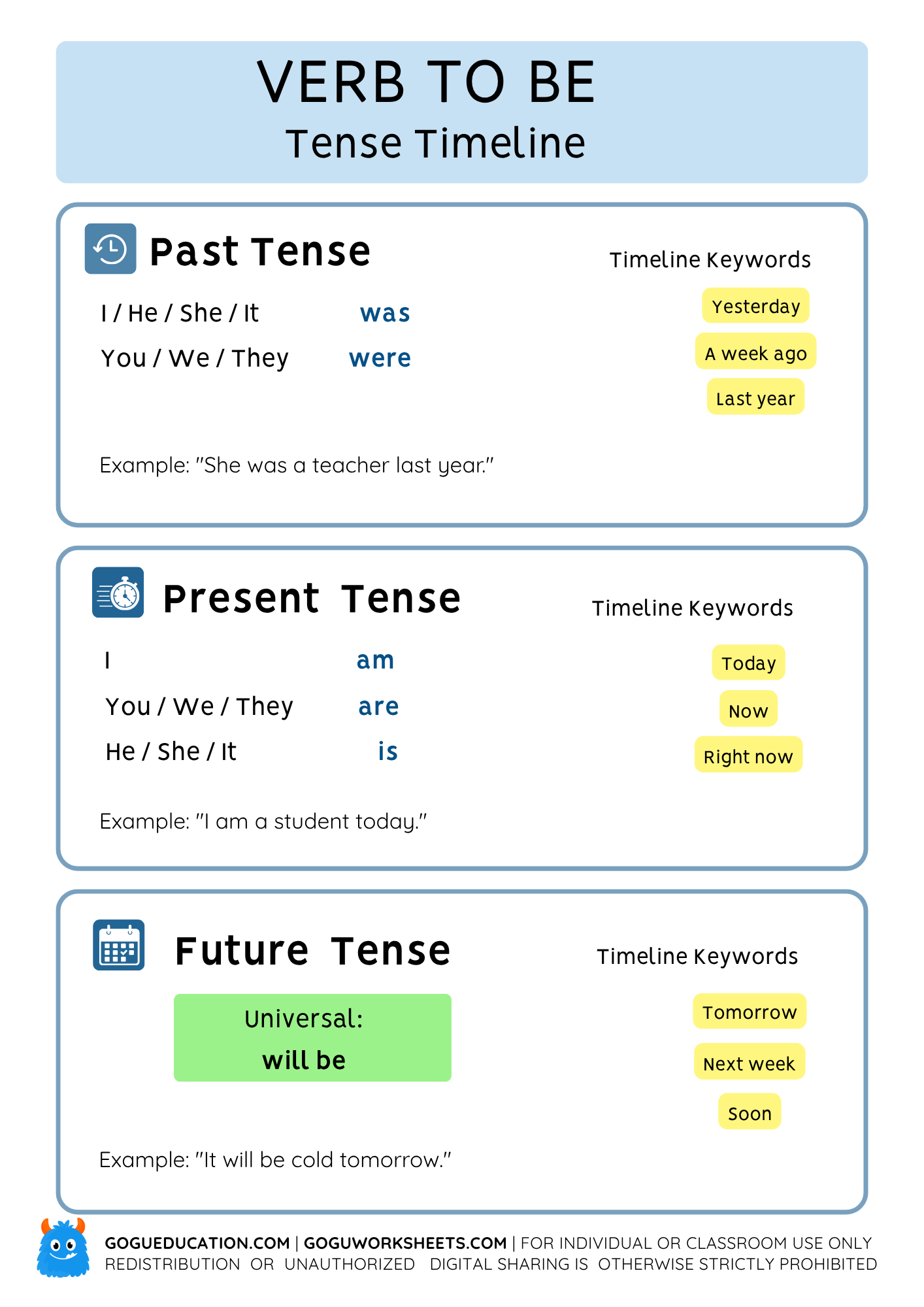
Conjugation & Tense Timeline
Learn how "to be" adapts to different time periods with specific grammar rules and keywords.
Past Tense
- I / He / She / It was
- You / We / They were
Timeline Keywords
Example: "She was a teacher last year."
Present Tense
- I am
- You / We / They are
- He / She / It is
Timeline Keywords
Example: "I am a student today."
Future Tense
Timeline Keywords
Example: "It will be cold tomorrow."
English Sentences & Usage
How to use "to be" for feelings, professions, and locations.
Feelings
- "I am happy."
- "She was surprised."
- "We are excited!"
Jobs
- "He is a doctor."
- "You were a pilot."
- "They will be chefs."
Places
- "We are at home."
- "It is in the box."
- "I was in London."
Qualities
- "The sky is blue."
- "You are very kind."
- "It will be beautiful."
Forming Questions in English
Grammar rule: To ask a question, simply swap (invert) the Subject and the Verb.
Statement Form
You are happy.
Question Form
Are you happy?
Common Question Examples
-
"Am I late?"
Present tense interrogative.
-
"Were they helpful?"
Past tense interrogative.
-
"Will you be there?"
Future: Verb + Subject + Be
English Grammar: Verb To Be Poster
Master the foundation of English sentences with our Verb "To Be" poster. This clear visual guide helps students understand pronoun-verb agreement and present tense conjugation.
Action Required
Please accept terms to unlock file